

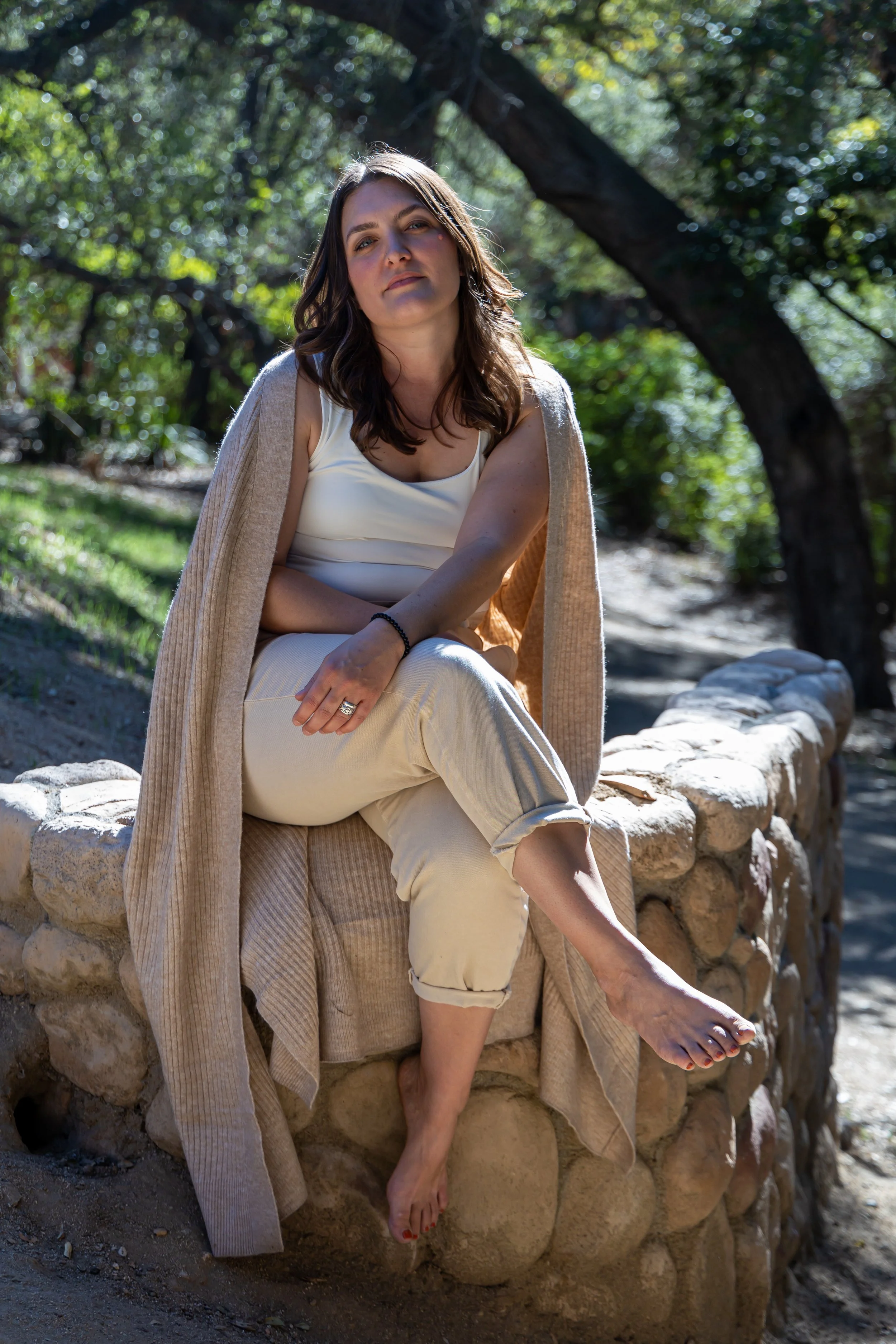
Hi, I’m Jamie.
My work begins with listening.
Listening to bodies. Listening to nervous systems. Listening for what’s being communicated beneath words.
People often describe my presence as grounding — steady in moments that are tender, complex, or high-stress. I move carefully into spaces, observing first, orienting to what’s already happening, and offering steadiness in a way that does not overtake or override. This ability to sense what is needed and respond with warmth, clarity, and precision is central to how I work.
I am especially attuned to work that unfolds in real life: during illness, postpartum, recovery, grief, exhaustion, and transition. These moments require more than technique — they ask for discernment, respect for autonomy, and deep nervous system awareness.
My work is shaped not only by professional training, but by lived experience. Navigating chronic illness within my own family has given me firsthand insight into how care extends far beyond the individual. I have spent years alongside doctors, hospitals, and care teams, witnessing how profoundly the quality of presence, communication, and support affects not only the person receiving care, but parents, caregivers, and entire family systems.
These experiences have deepened my understanding of how uniquely each body and each journey unfolds. They inform how I show up in my practice: with compassion, collaboration, and deep respect for the complexity of each person’s experience.
How I Work
I am a licensed massage therapist with over a decade of experience specializing in postpartum care, chronic pain, disability, and long-term conditions.
My work is grounded in presence, not performance — massage as a place of communion, not just correction. Each session is shaped in real time, following the body’s cues and the nervous system’s capacity.
Clients often reflect that my work supports not only physical ease, but emotional regulation and a sense of safety in their bodies. I take seriously the responsibility of entering someone’s personal space, especially when that is their home. I work with professionalism, care, and clear boundaries.
Collaboration is also a core part of my practice. When helpful, I coordinate thoughtfully with other practitioners and caregivers, understanding that well-being is often supported best through shared insight and mutual respect.
My practice is built around deep listening, and responsiveness. Each session is shaped by the needs of the person in front of me, drawing from a range of modalities.
Rather than moving through a set routine, I work slowly and intentionally, giving the body time to respond and unwind. This creates space for both physical relief and deeper integration of the whole self.
Bodywork with me is not only about tending to muscles or easing pain — though that often happens. It is also about creating moments of stillness, reconnecting with your body’s rhythms, and cultivating a sense of ease that can be carried beyond the session.
Whether someone comes for recovery, stress, grief, postpartum care, or simple rest, my goal is the same: to offer touch that supports the body’s own intelligence and honors the person as a whole.

Why In-Home Care
In-home work allows people to receive support without the added strain of travel or the effort of leaving home. It is particularly supportive for those navigating limited mobility, chronic illness, pregnancy, caregiving responsibilities, or fatigue. Within the familiarity of home, the body often settles more quickly, and the work can unfold with greater honesty and depth.
Providing care in someone’s home is an act of trust. I approach that trust with humility, attentiveness, and respect for the rhythms of each household.
Values
I believe care is not a luxury. It is a necessary condition for resilience, healing, and collective well-being.
My work is shaped by principles of disability justice, reproductive justice, and community care — not as abstractions, but as daily practices that inform how I listen, who I prioritize, and how I show up.
If you are seeking care that is calm, responsive, and deeply respectful — care that meets you where you are, both physically and relationally — I welcome that conversation.